
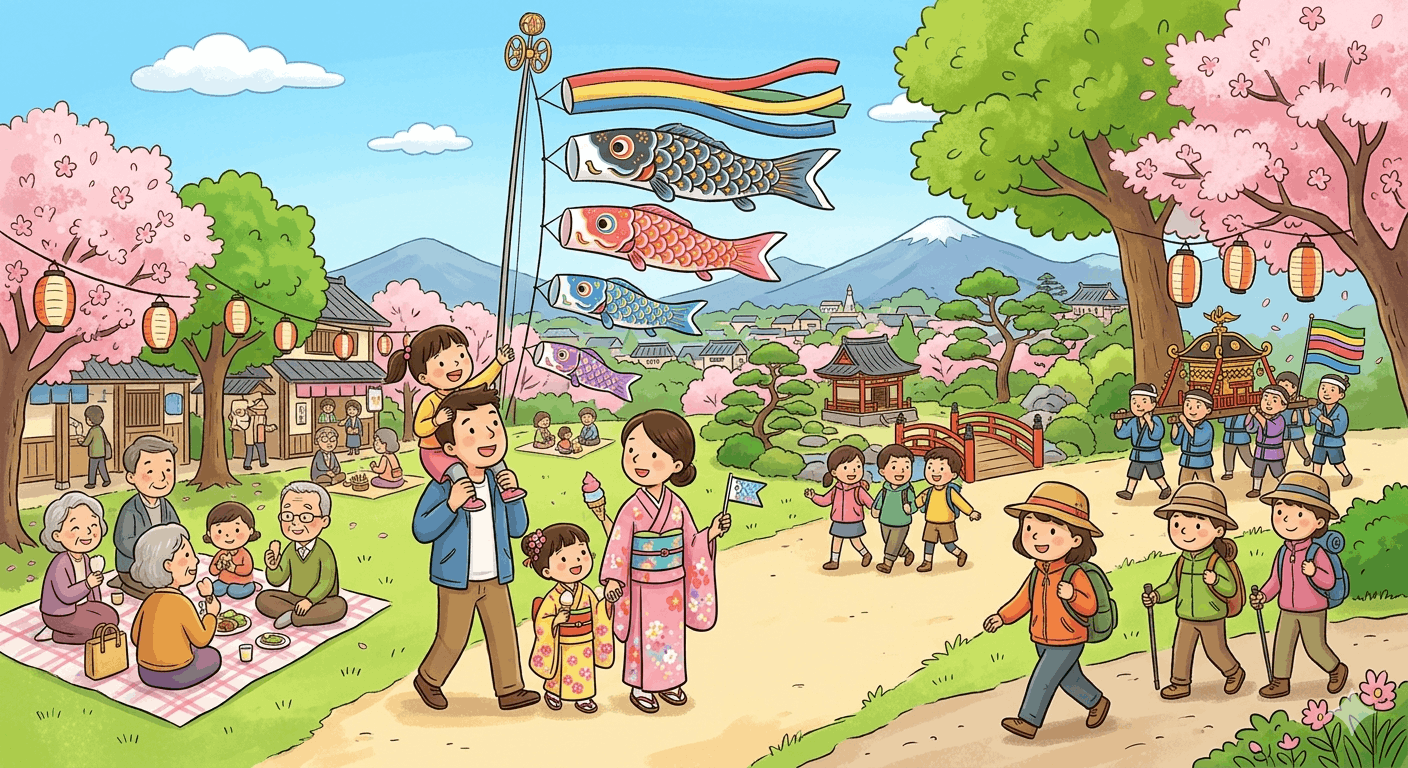
Golden Week in Japan
Golden Week in
Japan is a well-known cluster of public holidays that occurs during the spring
season and is considered one of the most important holiday periods in the
country. It typically takes place from late April to early May, combining
several national holidays into a continuous break. This period provides an
excellent opportunity for workers and students to relax and travel, leading to
a significant increase in tourism activities across Japan.
The origin of the
name “Golden Week” dates back to the 1950s and is believed to have started in
the film industry. During this time, many people took advantage of the holidays
to visit cinemas, resulting in a surge in revenue. Because of this success, the
period was referred to as a “golden” time, and the name gradually became widely
used among the general public.
Golden Week
usually lasts between 7 to 10 days, depending on how the holidays align with
weekends. The main holidays included are April 29 (Shōwa
Day), May 3 (Constitution Memorial Day), May 4 (Greenery Day), and May 5
(Children’s Day). In some years, when these holidays connect with weekends, it
creates an extended break lasting about a week or more. For Japanese people, it
is one of the best times to take a break from work and spend quality time
traveling with family and friends.
This periods also coincides with one of the most
pleasant seasons in Japan. Following the cherry blossom season, the weather
becomes mild and comfortable, with lush greenery emerging across the country.
As a result, both domestic and international tourism increases significantly.
Popular tourist spots, parks, and historical sites become crowded, and
highways, train stations, and airports are often packed with travellers.
In conclusion, Golden Week is like a special gift for
the people of Japan, offering them a chance to relieve stress from their daily
lives and strengthen bonds with family and loved ones.
Source – JNTO/ Japan-Guide/ Live Japan